
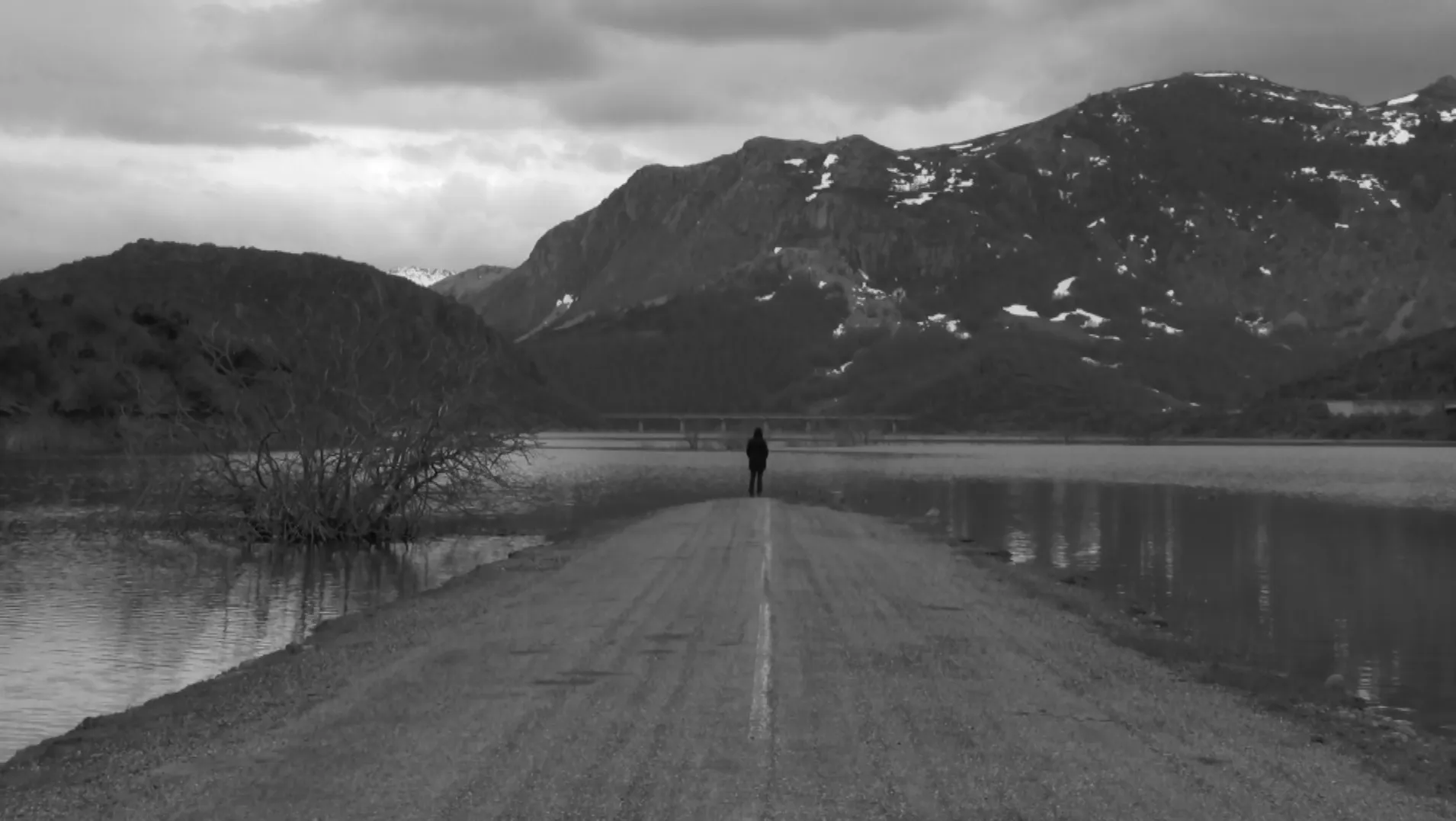
“Riaño, a small village in Spain, disappeared in 1987 during a flood caused by the construction of an artificial lake supposed to feed a dam. Three characters, Javier, Luis and Natalia, have spent more than a year criss-crossing this zone, where seven other villages have been engulfed, on foot. What is the aim of this walking? Making an investigation? Discovering a secret? Making a film? It would appear so, even if what passes before our eyes initially mostly resembles a making of documentary or clumsily assembled rushes. Perhaps because these bits of a film-in-the-making act like quotations, mishandled but aimed at leading to another story. All the sound work underlines this: the offcamera sound, the de-synchronisation; something has difficulty expressing itself. Shreds of cinema echo a torn-up memory: it is no longer just about a flood and a dam, but something forgotten that is far bigger, which still covers up the chronicles of the Civil War. Los Hijos is the name of a collective of three young filmmakers. They are ambitious and address the History of their country; being prudent, they arm themselves with the cinema. Ultimately, it is beautiful material that is complex, playful, and crafty, and refuses any laziness. It’s up to us to take part in the work.”
2010 JEAN-PIERRE REHM, CATALOGUE FID MARSEILLE 2010
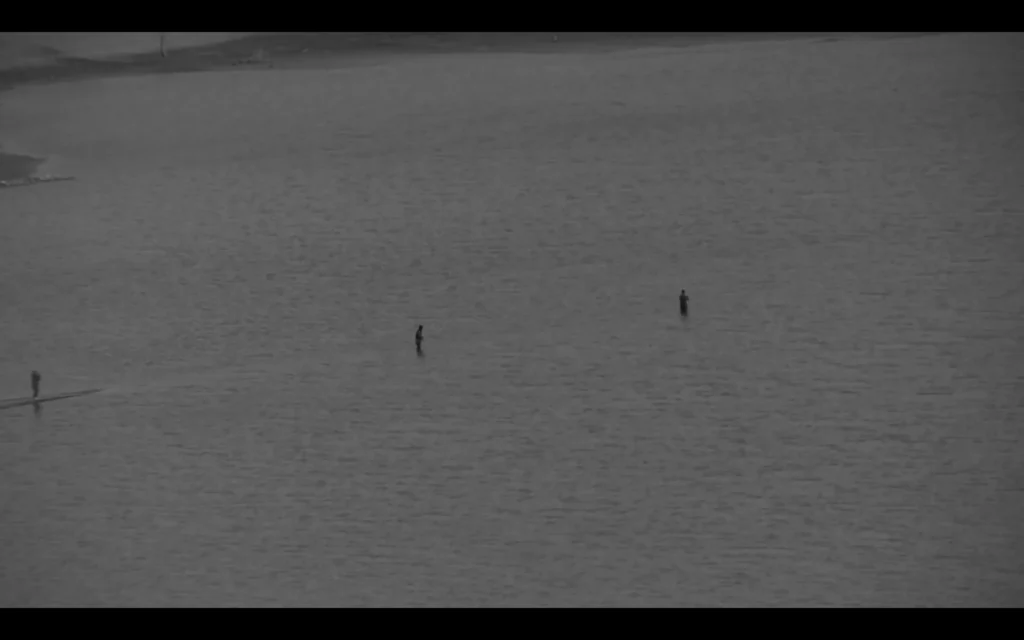
“An interesting, risky, lively and evocative work, the film sets out to explore the area of Riaño in order to unravel not only its development but also its semantic field. The Materials plays with a deliberately amateur aesthetic, apparently careless and uncomfortable, and with a treatment of sound that replaces the supposed dialogues, leaving background noise as the only soundtrack. The recovery of the history of the town in question is almost impossible, barely suggested, observed in the abstract, while the film’s discourse tends towards the metacinematographic, eventually taking a disconcerting, mysterious and strange turn, transforming the documentary into a horror story.”
JARA YÁÑEZ, CAHIERS DU CINÉMA, SPAIN
“Los Hijos prefer the imperfect shot, the alternative takes that end up in the trash, the raw materials; in short, mistakes over certainties, the chaff before the wheat. Underlying their attitude is the vocation of the gleaners from Agnès Varda’s film, who rebel against society’s leftovers and waste, an intensely ecological vocation that forces us to reconsider our traditional understanding of the well-made work. Los Hijos make their documentary about Riaño, but they bury it beneath the leftover material. We mentioned Jia Zhang-ke before. Forget him. If The Materials refers to anything or anyone, it is to Agnès Varda’s The Gleaners and I, without bearing any direct relationship of quotation or inspiration to Albert Serra’s approach, simply because, when faced with a highly codified subject (the ecological documentary, the adaptation of a literary classic), he prefers to film the interstices, the recesses, what had always remained outside the frame, what we had never seen.”
JAIME PENA
EL AMANTE
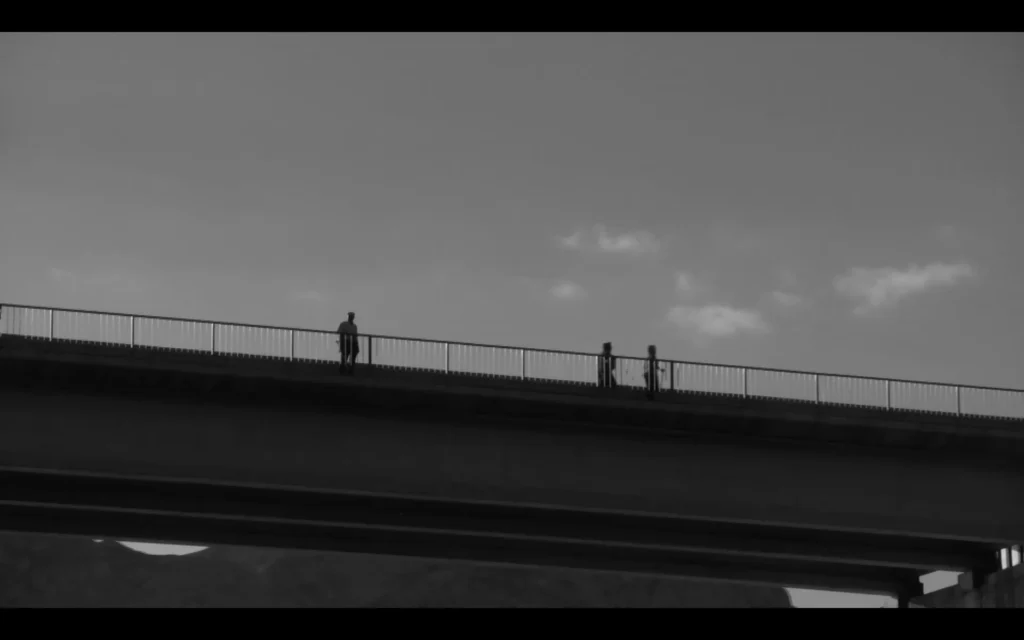
“As children of the generation that brought ‘representative democracy,’ free market economics and neoliberalism to Spain, the complex national, historical and sentimental legacy of Los Hijos has provided the primary sources for their films but an additional inheritance is filmic, both in national and international terms. Highly literate cinematographically, Los Hijos draw deeply (critically, ironically and, at times, irreverently) from their antecedents. The combination of archive material and citation gives their work its particular resonance. The films of Los Hijos are charged with a particular tension produced of the recursive combination of national historiography and filmic materiality that, at the same time, eludes allegorical readings. In spectral terms, these films express a critical spirit of the age and their generation but one that while harking backwards simultaneously leaps forward in time. Their critique is of the tradition 4 (the national, the filmic and the national-filmic tradition) with which they are associated. The results are jarring, dissymmetrical encounters between generations and between modes of representation.”
Retrospective Future Perfect: History, Black Holes and Time Warps in the Films of Los Hijos
STEVEN MARSH
UNIVERSITY OF ILLINOIS AT CHICAGO